Selini Demetriou
Born in 1982, Swiss-Cypriot artist Selini Demetriou develops a multidisciplinary practice spanning painting, sculpture, installation, and the spatial conditions through which an artwork is encountered. Her work is grounded in a sustained investigation of material, structure, repetition, and transformation, while remaining equally attentive to the less tangible processes through which perception, memory, and association shape our understanding of objects and images.
Rather than treating the artwork as an autonomous or self-contained object, Demetriou considers it as part of a broader field of relationships. Materials, surfaces, fragments, constructed elements, and architectural space enter into shifting constellations in which no single component necessarily assumes priority. A work may begin with the language of painting and move toward sculpture; an object may operate simultaneously as image, structure, and spatial intervention. These transitions are central to a practice in which categories remain deliberately permeable.
Demetriou’s work often emerges through processes of accumulation, reduction, displacement, and reconfiguration. Forms appear to have been assembled, interrupted, reconsidered, or temporarily brought into equilibrium. What at first seems formally resolved may reveal traces of instability: an unexpected material encounter, an irregular edge, a shift in scale, or a relationship between elements that resists immediate explanation. Such moments prevent the work from becoming fixed and instead allow it to remain open to successive readings.
Material is never simply a vehicle for form. Its physical properties, weight, texture, density, transparency, resistance, vulnerability, participate actively in the construction of meaning. Demetriou allows these qualities to remain visible rather than subordinating them to representation. Surfaces can carry evidence of process; structures can retain a sense of provisionality; individual components can appear simultaneously deliberate and contingent. The resulting works occupy a space between construction and intuition, precision and uncertainty.
This attention to materiality is accompanied by an equally sustained consideration of space. Demetriou’s works do not merely occupy their surroundings; they establish relationships with them. Walls, floors, distances, thresholds, and lines of sight become part of the experience of the work. The position of the viewer is consequently never neutral. Meaning changes according to proximity, movement, perspective, and duration.
In this sense, looking becomes a temporal activity. Demetriou resists the immediate legibility that increasingly characterizes the circulation of images. Her works ask for another rhythm of attention, one in which perception develops gradually and where meaning is not delivered all at once. An initial encounter may be governed by composition or material presence, while subsequent looking reveals quieter relationships between fragments, surfaces, voids, and intervals.
Absence can be as significant as presence. Empty space, interruption, incompleteness, and the distance between elements function not as deficiencies but as active components of the work. They create room for projection and association, allowing the viewer to participate in the construction of meaning without being directed toward a predetermined narrative.
This openness is important to Demetriou’s visual language. Her works resist the demand for a singular interpretation. Instead, they establish conditions in which different readings can coexist. The familiar may become uncertain; an apparently functional structure may lose its purpose; an abstract configuration may unexpectedly suggest a body, an architectural fragment, a landscape, or the residue of an event. Such associations remain provisional. They emerge and recede according to the viewer’s own position and experience.
Across her practice, there is a persistent tension between order and instability. Geometric structures encounter irregular forms; controlled compositions are interrupted by material contingencies; repetition establishes systems that are never entirely closed. Demetriou does not seek to resolve these oppositions. Instead, she allows them to remain active within the work, producing a visual language in which coherence is continually formed and questioned.
The relationship between fragment and whole is particularly significant. Individual elements often appear to belong to a larger structure that remains absent or impossible to reconstruct completely. A fragment can therefore operate both as an autonomous form and as evidence of something beyond itself. This ambiguity gives the work a particular psychological dimension: objects and images can seem to carry histories that are never fully disclosed.
Memory enters this field not necessarily as narrative or representation, but as a structure of perception. Just as memory is partial, selective, and continually reconstructed, Demetriou’s works frequently allow meaning to emerge through incomplete information. The viewer encounters traces rather than explanations, relationships rather than conclusions. What is absent becomes inseparable from what remains.
There is consequently a quiet archaeological quality to aspects of her practice. Materials and forms can appear as if they have been recovered, displaced, preserved, or reorganized. Yet this archaeology does not point toward a single historical past. It operates instead as a way of thinking about how objects accumulate associations and how meaning changes when something is removed from one context and placed within another.
At the same time, Demetriou’s practice remains firmly rooted in the present. Its sensitivity to material, spatial experience, and duration proposes an alternative to the accelerated consumption of images. The work does not demand attention through spectacle. It establishes conditions for attention to occur.
This distinction is essential. Demetriou’s installations and objects often derive their intensity from restraint. Their presence can be quiet without being passive. Subtle changes in proportion, texture, rhythm, or placement acquire significance precisely because the works refuse to dictate the terms of their reception. The viewer is given both responsibility and freedom: to approach, to move around, to reconsider, and to remain with uncertainty.
Seen together, Demetriou’s works form less a sequence of discrete objects than an evolving vocabulary. Certain materials, structures, gestures, and spatial relationships recur, but they do so through variation rather than repetition in the strict sense. Each work becomes part of an ongoing investigation into how physical things acquire emotional, perceptual, and conceptual resonance.
Her practice ultimately proposes that meaning does not reside entirely within the object itself. It is produced in the encounter, between material and space, image and memory, presence and absence, artwork and viewer. The exhibition becomes a temporary constellation in which these relationships can emerge, shift, and dissolve.
Demetriou’s work therefore asks a deceptively simple question: what happens when we allow ourselves to remain with an object before deciding what it is?
In that interval between recognition and uncertainty, her practice finds its particular force. The artwork becomes not an answer but a condition for looking, a space in which perception can slow down, categories can become unstable, and familiar relationships can be encountered anew.
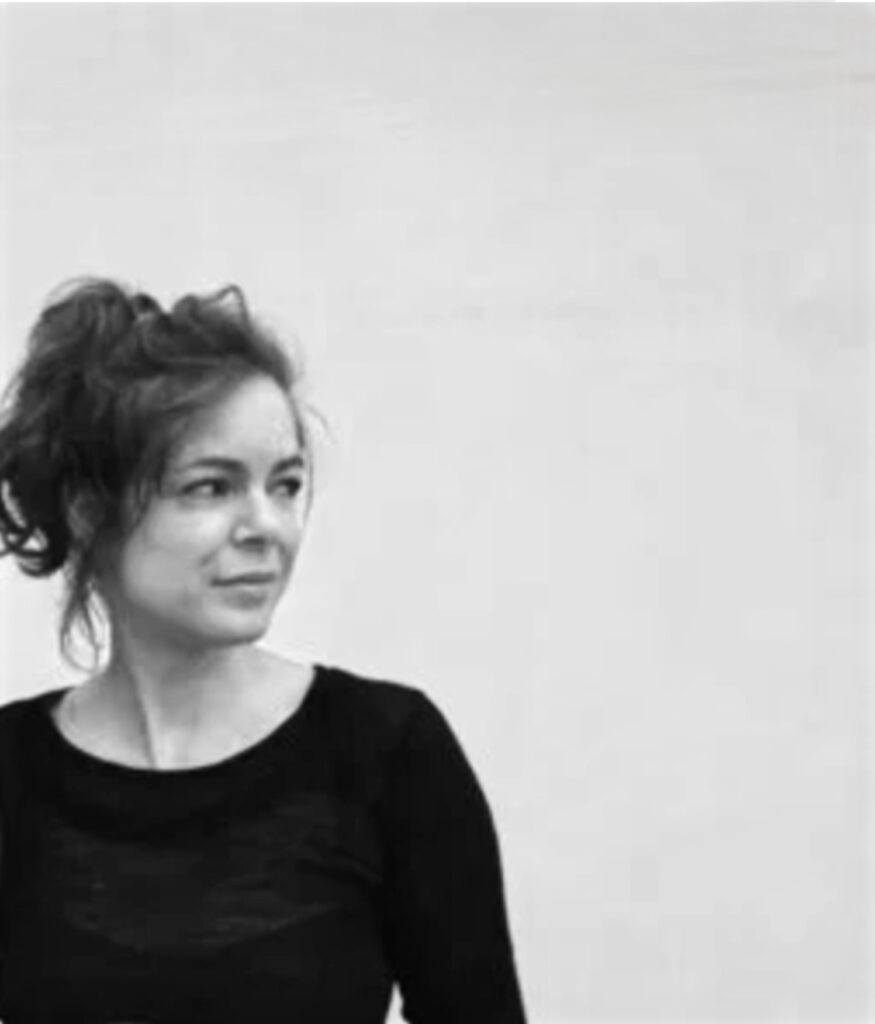
Selini Demetriou © The Artist