Edvard Munch
Born 1863 in Løten, Hedmark, Norway; died 1944 in Ekely, Oslo, Norway
Edvard Munch transformed personal experience into one of the most powerful visual languages of modern art. Across painting, drawing, and printmaking, he returned obsessively to themes of love, anxiety, illness, jealousy, isolation, and death, treating them not as episodes from an individual life but as fundamental conditions of human existence. His figures rarely inhabit stable worlds. They stand at thresholds, move through streets, confront one another in rooms, or dissolve into landscapes charged with psychological intensity. In Munch’s work, the external world becomes inseparable from inner experience.
Born in Norway in 1863, Munch came of age at a moment when European art was abandoning the conventions of naturalism and searching for new ways to represent subjective reality. He absorbed elements of Impressionism, Symbolism, and the radical painting he encountered in Paris and Berlin, yet quickly developed a language that belonged unmistakably to him. Color became emotional rather than descriptive; space could flatten or distort; contours bend and ripple around figures as if responding to invisible forces. What mattered was not the faithful representation of what could be seen, but the emotional truth of what had been felt.
This principle lies at the center of Munch’s most ambitious project, the interconnected group of works he called the Frieze of Life. Developed over several decades, the cycle brought together recurring subjects of desire, separation, fear, sickness, and mortality. Rather than presenting a linear narrative, Munch created a constellation of psychological states. Lovers merge into one another or turn away; faces become masks; bedrooms, beaches, bridges, and city streets take on the atmosphere of memory or dream. Individual motifs reappear in different media and at different moments, suggesting that human experience is itself cyclical, repeated, transformed, and never entirely resolved.
Munch’s practice was equally radical in its treatment of the image as something unstable and repeatable. He continually revisited his own compositions, producing new versions in painting, lithography, woodcut, and etching. Each repetition could alter scale, color, texture, or emotional emphasis. Rather than treating an image as fixed, Munch understood it as a living structure capable of being reactivated and transformed. His prints, in particular, allowed him to strip forms to their essentials: a face, a shoreline, a pair of figures, a diagonal railing. Through extreme economy, these images acquire an almost iconic force.
The physical surface of Munch’s works is central to their expressive power. Paint can appear thin and exposed or dense and agitated; lines can tremble, cut sharply across the composition, or expand into broad rhythms. In his woodcuts, he often exploited the natural grain of the block, allowing the material itself to become part of the image. Such techniques resist illusionism. They constantly remind the viewer that emotion is being constructed through color, line, texture, and rhythm.
Although Munch is frequently associated with anguish, his work cannot be reduced to despair. It is equally concerned with intimacy, desire, memory, nature, and the instability of perception. Even his darkest images contain moments of extraordinary formal beauty. The landscape may become radiant; a face may emerge from color with startling tenderness; a seemingly simple encounter between two figures can carry the weight of an entire emotional history.
Few artists did more to establish the idea that a work of art could serve as a direct register of psychological experience. Munch’s influence extended far beyond Expressionism, shaping subsequent generations of artists interested in the body, identity, alienation, sexuality, and the unstable boundary between private emotion and public image. His most familiar works have become cultural symbols, yet their power lies precisely in their resistance to simple interpretation.
Munch once described his art as arising from his own life, but the enduring force of his work comes from the way he transformed biography into something larger. His paintings and prints do not merely illustrate fear, desire, or grief; they give those experiences visual form. Through distorted space, heightened color, repetition, and radical simplification, Munch made the invisible pressures of human life visible. In doing so, he helped redefine what modern art could be: not a mirror of the world as it appears, but a record of what it feels like to inhabit it.
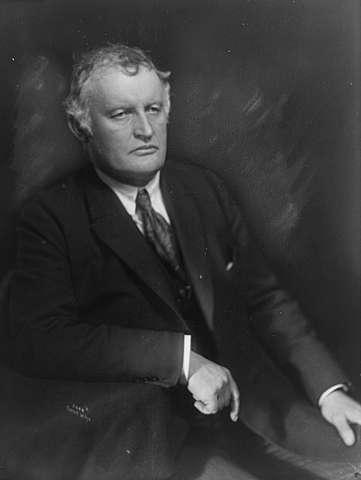
Edvard Munch, 1921. © the Artist; Photograph by Anders Beer Wilse
Watch: Edvard Munch in 8 Minutes by Munchmuseet