Fernand Léger
Born 1881 in Argentan, Normandie, France; died 1955 in Gif-sur-Yvette, Paris
Fernand Léger (1881–1955) forged one of the most distinctive visual languages of modernism, transforming the rhythms of the machine age into a monumental art of color, form, and human presence. Emerging in Paris in the years before World War I, Léger absorbed the radical lessons of Cubism while resisting its increasing abstraction. Where Picasso and Braque fractured objects into shifting facets, Léger gave volume new weight: cylinders, gears, limbs, buildings, and clouds were rendered as bold, rounded forms, held together by powerful contrasts of black, white, and saturated color. His paintings seem at once mechanical and intensely physical, constructed from the visual vocabulary of an industrial world yet animated by an enduring fascination with the human figure.
Léger’s experience as a soldier during World War I profoundly altered his understanding of modern life. Surrounded by artillery, machinery, steel, and the collective existence of men from different social backgrounds, he began to see modern technology not simply as a threat but as a new aesthetic reality. The metallic surfaces of weapons, the geometry of machines, and the fragmented sensations of the battlefield entered his art, leading to the dynamic compositions of the late 1910s and early 1920s. In works such as The City (1919), the modern metropolis becomes a dense orchestration of architectural fragments, advertising signs, mechanical forms, and flashes of color, a world experienced not from a single viewpoint, but through speed, interruption, and simultaneity.
Yet Léger’s modernism was never exclusively concerned with machines. At its center was a sustained belief in the dignity of ordinary life. Workers, cyclists, acrobats, construction laborers, families, and leisure seekers populate his paintings with the same visual authority as industrial objects. Human bodies are simplified into powerful, almost sculptural forms: hands become monumental, faces mask-like, limbs cylindrical. By stripping his figures of individual anecdote, Léger sought something collective and universal. The worker, the mechanic, or the woman holding a flower could become, in his paintings, as commanding a subject as the heroes of classical art.
Color played an increasingly independent role in this vision. Léger separated color from descriptive function, allowing brilliant reds, yellows, blues, and greens to move across compositions with their own rhythm. Figures might be divided by unexpected fields of color; objects could appear detached from the hues surrounding them. This liberation of color from representation anticipated developments that would become central to postwar painting and graphic culture. Léger understood modern perception as a field of contrasts, large and small, curved and angular, organic and mechanical, static and dynamic, and his compositions derive their energy from the tension between these oppositions.
His interests extended far beyond painting. Léger worked in film, mural painting, stained glass, ceramics, mosaics, book design, theater, and architecture, continually testing how modern art might enter public and everyday life. His experimental film Ballet mécanique (1924), made with Dudley Murphy and with the involvement of Man Ray, translated his fascination with repetition, fragmentation, and movement into cinema, juxtaposing mechanical objects, human bodies, typography, and ordinary things in a rapid visual rhythm. Such projects reflected Léger’s conviction that art should not remain isolated within the private world of the collector, but could participate directly in the spaces and technologies of modern society.
During the 1930s and 1940s, and particularly following his years in the United States during World War II, Léger’s compositions became increasingly expansive. Acrobats, swimmers, cyclists, builders, and groups of figures inhabit broad fields of color with a new sense of openness and optimism. In these late works, the machine and the human body no longer appear as opposing forces. Instead, they coexist within an idealized vision of collective modern life, one in which technological progress, labor, leisure, and art might belong to a shared social environment.
Throughout his career, Léger remained committed to a paradox that defines much of twentieth-century modernism: how to make an art radically responsive to contemporary life while preserving a sense of permanence and monumentality. His paintings are unmistakably products of the modern city, mass production, cinema, advertising, and mechanical reproduction, yet their simplified forms possess an almost classical stability. He transformed the anonymous materials of industrial civilization into images of extraordinary clarity and physical force.
Léger’s influence reaches far beyond the historical boundaries of Cubism. His emphatic outlines, isolated areas of saturated color, fascination with commercial imagery, and elevation of ordinary objects anticipated aspects of Pop art, while his interest in architecture and public art helped redefine the relationship between painting and the built environment. Above all, Léger proposed a vision of modernity in which the machine, the city, and the human figure could occupy the same pictorial world. His art does not merely represent the twentieth century’s transformation of everyday life; it gives that transformation a visual grammar, bold, rhythmic, democratic, and unmistakably modern.
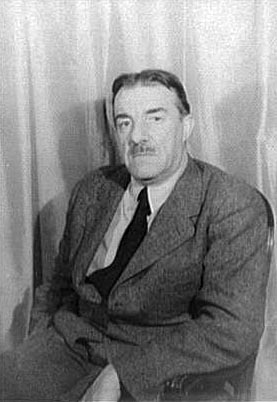
Fernand Léger, © The Artist; photograph by Carl Van Vechten (undated)
Watch: Fernand Léger, peintre cubiste by France 3 TV (in French)