Demetriou · Terpstra · Kwon
- What remains unseen
Bringing together three distinct artistic positions, this exhibition presents new and recent works by Selini Demetriou, Frederick Terpstra, and Seol Kwon. Working across installation, drawing, and painting, the artists approach the relationship between experience and form through markedly different material and perceptual strategies. Their practices converge not around a single theme, but through a shared attentiveness to the ways in which the visible world is encountered, interpreted, and transformed.
Rather than proposing a unified narrative, the exhibition establishes a field of relations between three independent practices. Material, memory, observation, bodily experience, and pictorial space emerge as recurring points of inquiry, yet assume different meanings within each artist’s work. What connects these positions is less a common language than an interest in the processes through which experience becomes image, object, structure, and form.
Selini Demetriou approaches material as an active field of inquiry. Moving between installation, sculpture, and spatial intervention, her work examines the shifting relationships between bodies, objects, surfaces, and the environments they inhabit. Materials are not treated as neutral carriers of meaning, but as elements with their own physical histories and temporal conditions. Through processes of accumulation, displacement, repetition, and transformation, Demetriou constructs situations in which form appears provisional: assembled, interrupted, or held temporarily in equilibrium.
Her works often occupy an ambiguous position between object and environment. Their meaning emerges not only from what they are, but from how they inhabit space and how the viewer encounters them within it. Traces of duration, use, movement, and alteration remain present, allowing material itself to register time. The resulting installations resist fixed interpretation, proposing instead a sustained attention to the conditions through which objects acquire presence and meaning.
In the drawings of Frederick Terpstra, attention turns toward the overlooked structures and transient situations of everyday life. Streets, architectural fragments, vehicles, figures, gestures, and passing encounters are extracted from the continuous flow of the visible and subjected to the slower temporality of drawing. Working predominantly in black and white, Terpstra reduces the visual field to line, contrast, shadow, and absence, allowing apparently ordinary scenes to acquire an intensified psychological and spatial presence.
Observation in Terpstra’s work is never entirely passive. To draw is already to select, isolate, omit, and reconstruct. The street becomes both subject and structure: a space in which individual trajectories intersect with architecture, movement, and the rhythms of collective life. Moments that might otherwise disappear without consequence are suspended and reconsidered. Through this process, the incidental becomes a site of concentration, and drawing becomes a means of examining not only what is seen, but how seeing itself organizes the world.
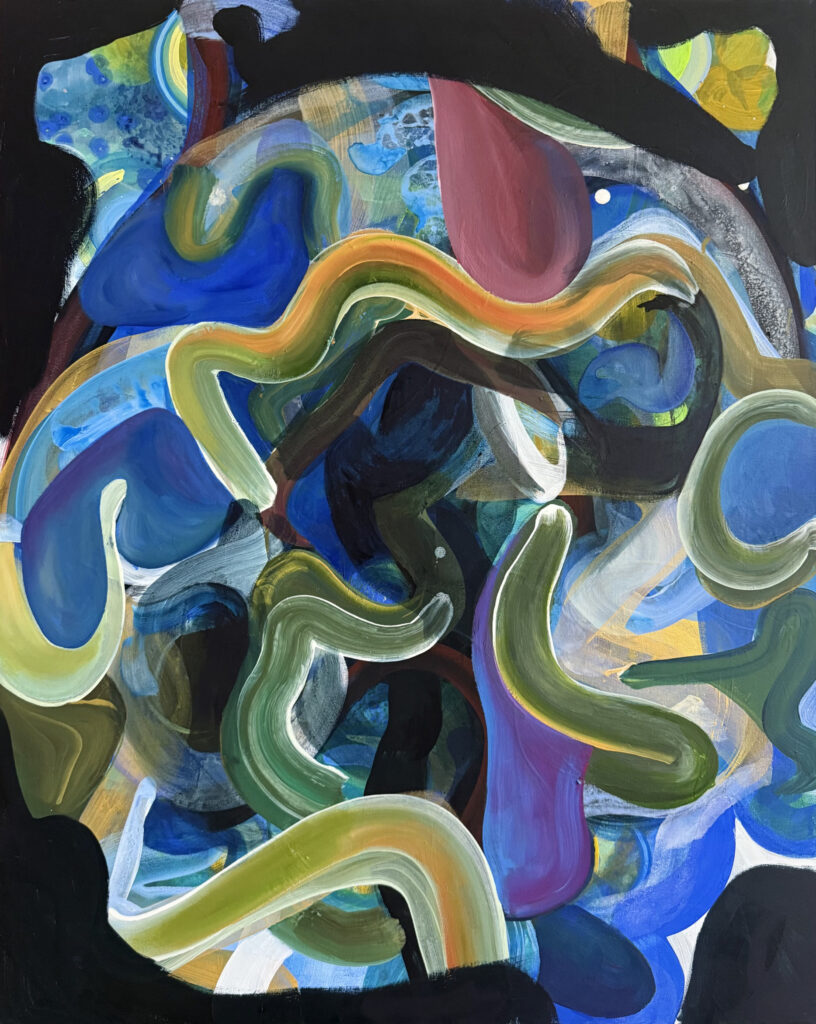
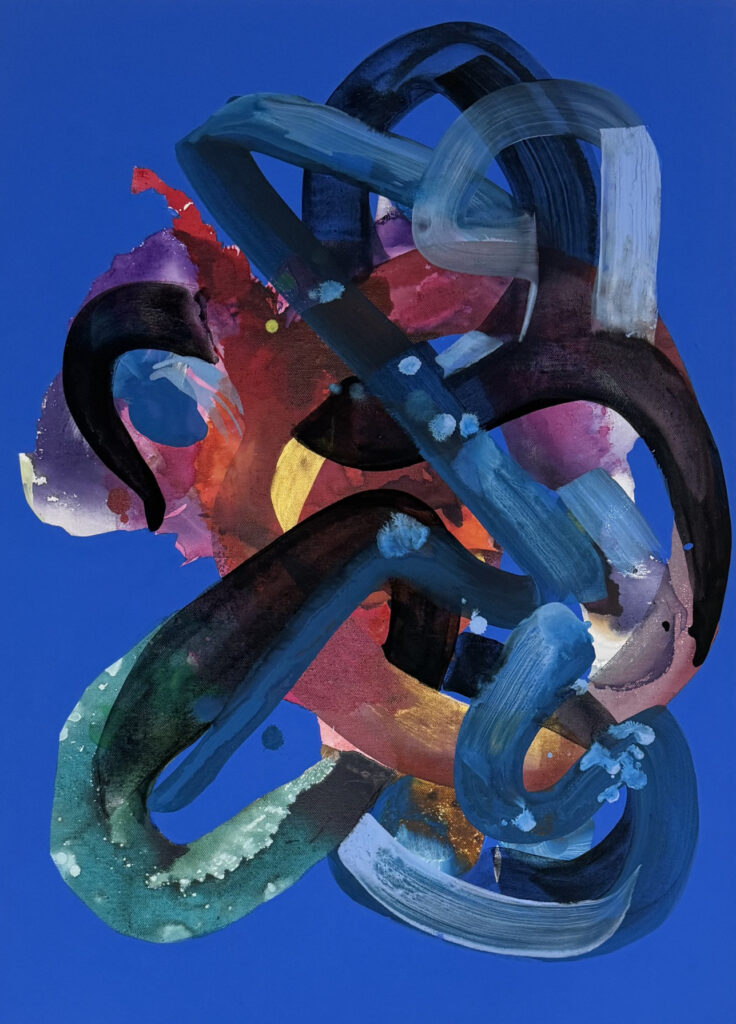
Seol Kwon works through painting to explore a more fluid territory between bodily experience, memory, imagination, and the constructed image. Color, line, gesture, and organic form move across the pictorial field without settling into stable representation. Forms emerge, overlap, dissolve, and reappear, producing compositions that oscillate between recognition and uncertainty.
Rather than describing a predetermined image, Kwon’s paintings appear to develop through the act of making itself. Relationships between color and form remain open and mutable; spatial depth gives way to passages of compression, expansion, and movement. The body is present less as an identifiable figure than as a perceptual register, a sense of rhythm, proximity, tension, and movement through which the painted surface becomes an unstable field of experience.
The distinctions between these three practices are central to the exhibition. Demetriou investigates the physical and temporal conditions of matter; Terpstra examines the structures through which the visible world is observed and translated; Kwon explores the instability of perception within the space of painting. Each begins from a different point, object, observation, image, yet each considers form not as a conclusion, but as something produced through an ongoing process of encounter and transformation.
Presented across the three floors of Pascal Robert Gallery, the exhibition gives each artist an autonomous spatial presence while allowing correspondences to emerge between their works. Moving from one position to another, the viewer encounters different relationships between material and image, presence and absence, recognition and uncertainty. The architecture of the exhibition becomes part of this experience: not simply a container for three separate bodies of work, but a sequence of spaces through which distinct modes of perception can unfold.
What connects Demetriou, Terpstra, and Kwon is therefore neither a common style nor a prescribed thematic framework. It is a willingness to understand artistic practice as a form of inquiry: a way of attending to what surrounds us, of reorganizing what appears familiar, and of testing how experience becomes image, object, and form.
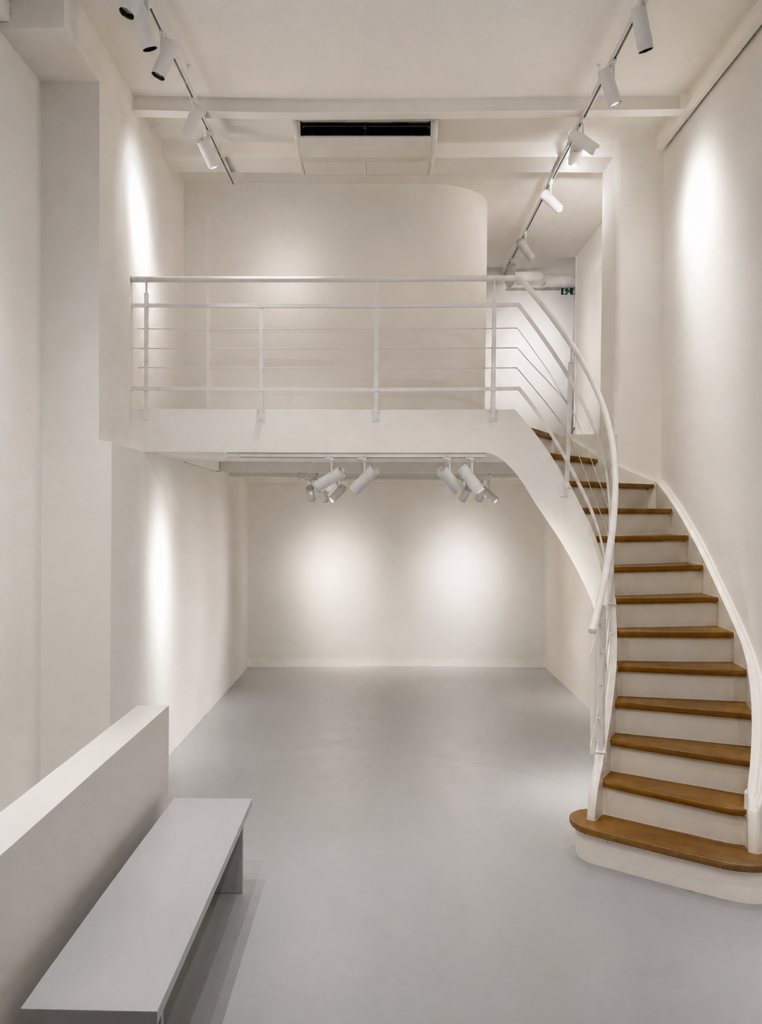
Pascal Robert Gallery, 2026
Selection
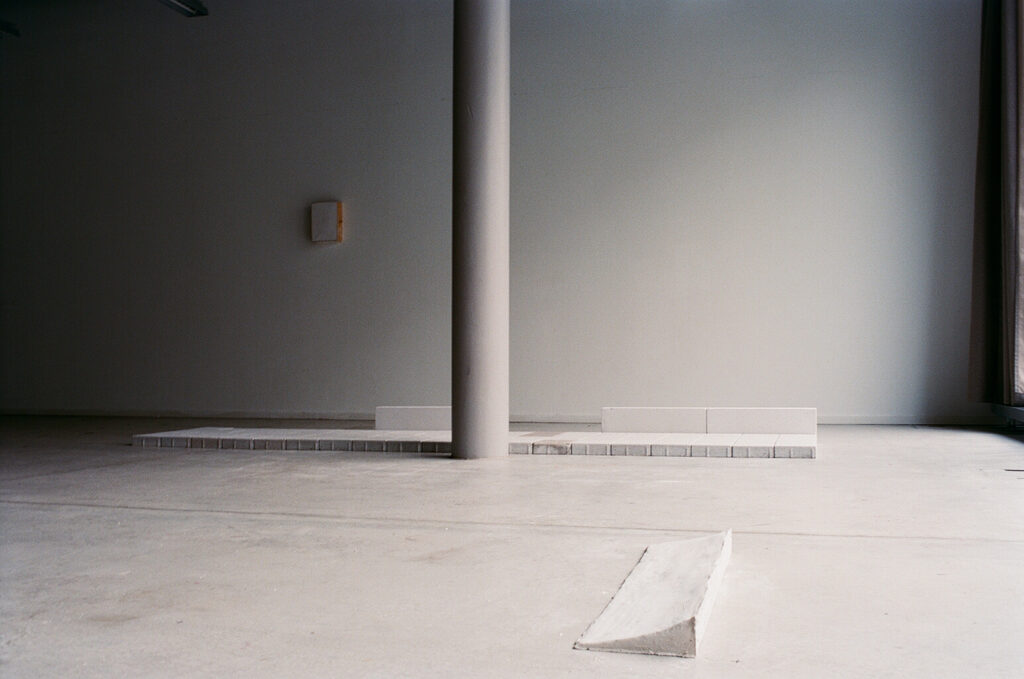
Selini Demetriou
«…because I love Material, I love Architecture and old big Cities, because of this history in their consistence, in Architecture, in Material»,
Archival pigment print
image:
framed:
(SED.00001.P)
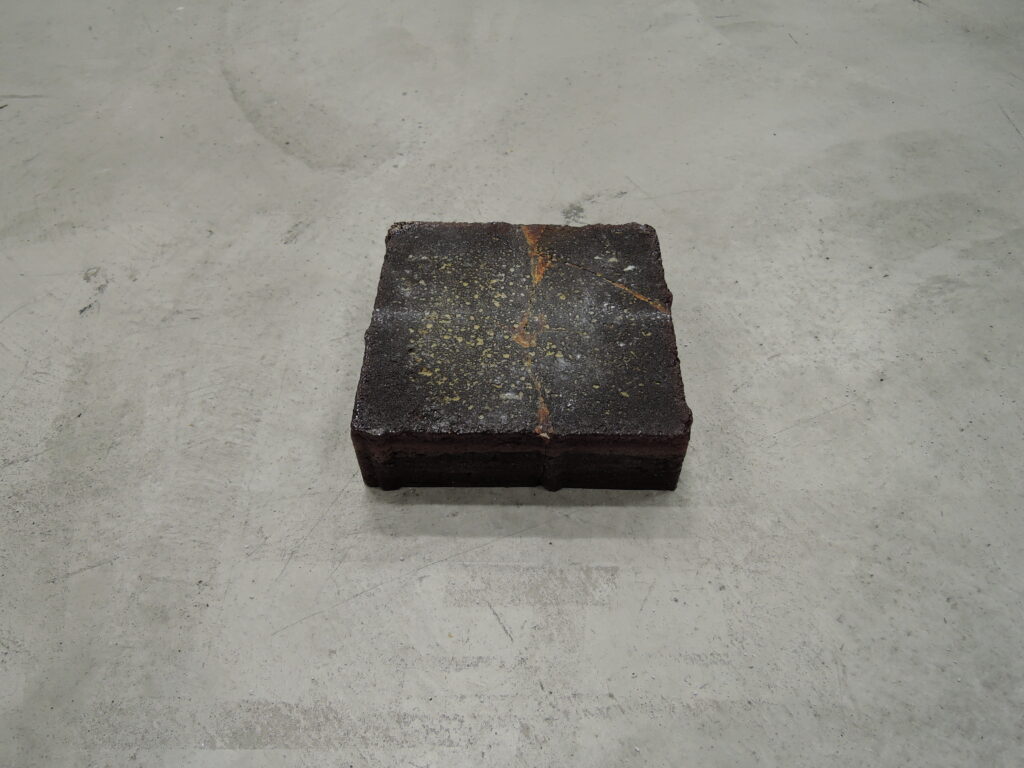
Selini Demetriou
The Sugar Paving Stone
19,5 x 19.5 x 5.5cm (7.68 × 7.68 × 2.17 in.)
Poured caramelized sugar
with certificate
SED.00001.O
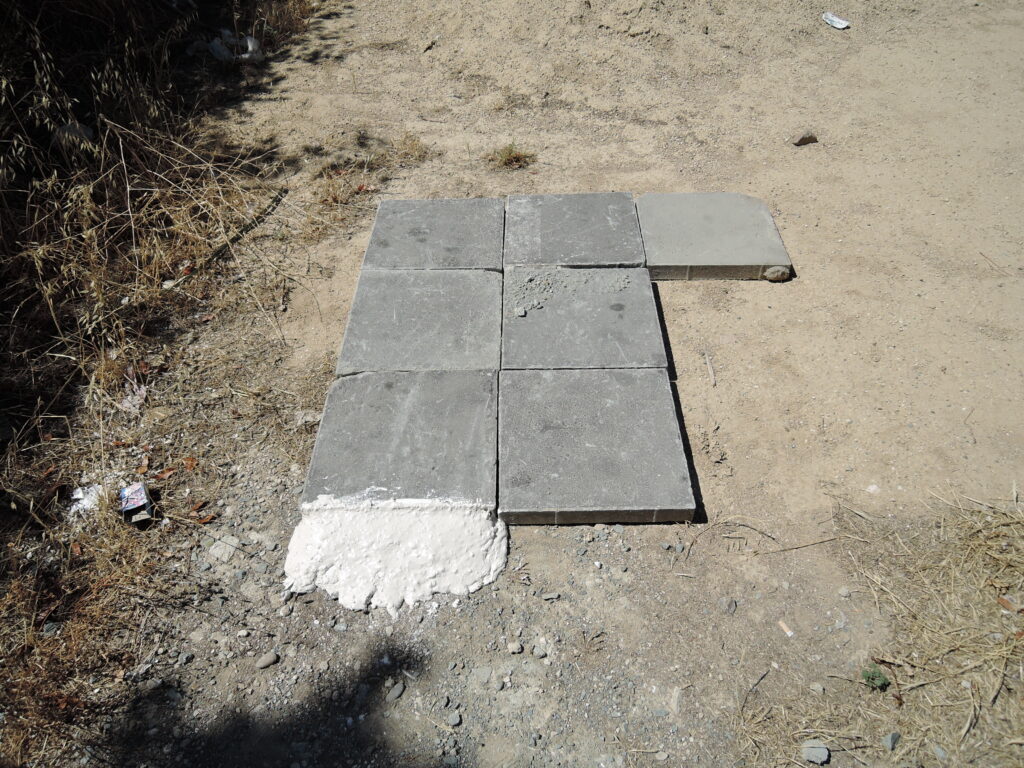
Selini Demetriou
Geographical Object, Sidewalk II, 2022 (Nikosia, Cyprius),
installation of concrete slabs, plaster
dimension variable
with certificate
(SED.00002.O)
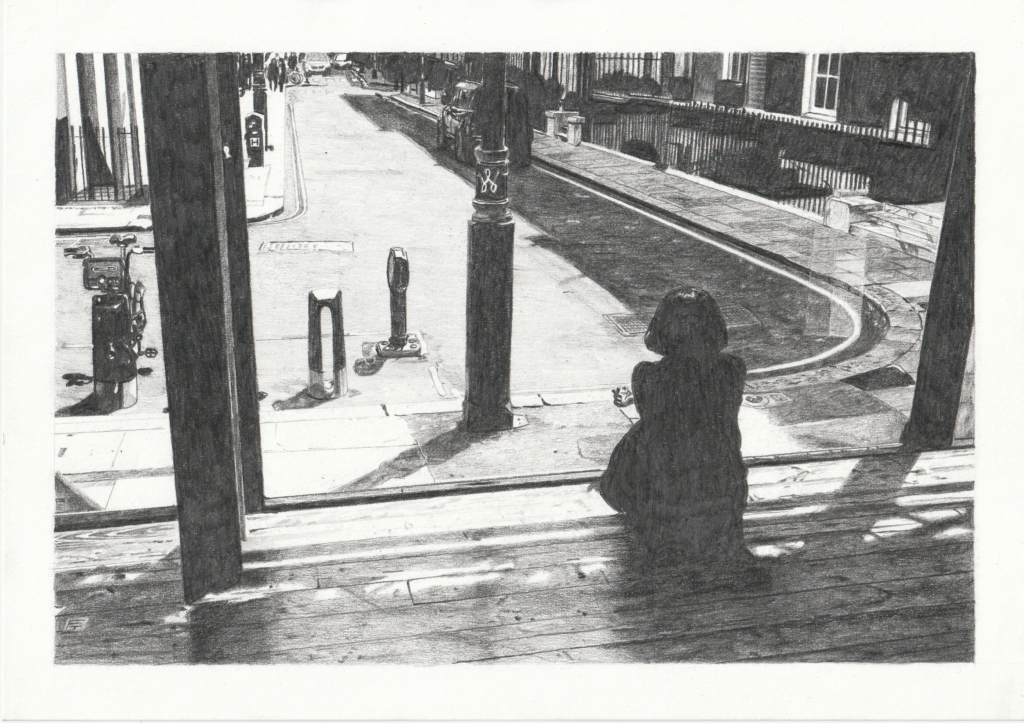
Frederick Terpstra
The silent observer, 2026
graphite on Fabriano Accademia paper
image: 21 x 29.7cm (8.27 × 11.69 in.)
framed: 32 x 42cm (12.60 × 16.54 in.)
FRT.00001.Z
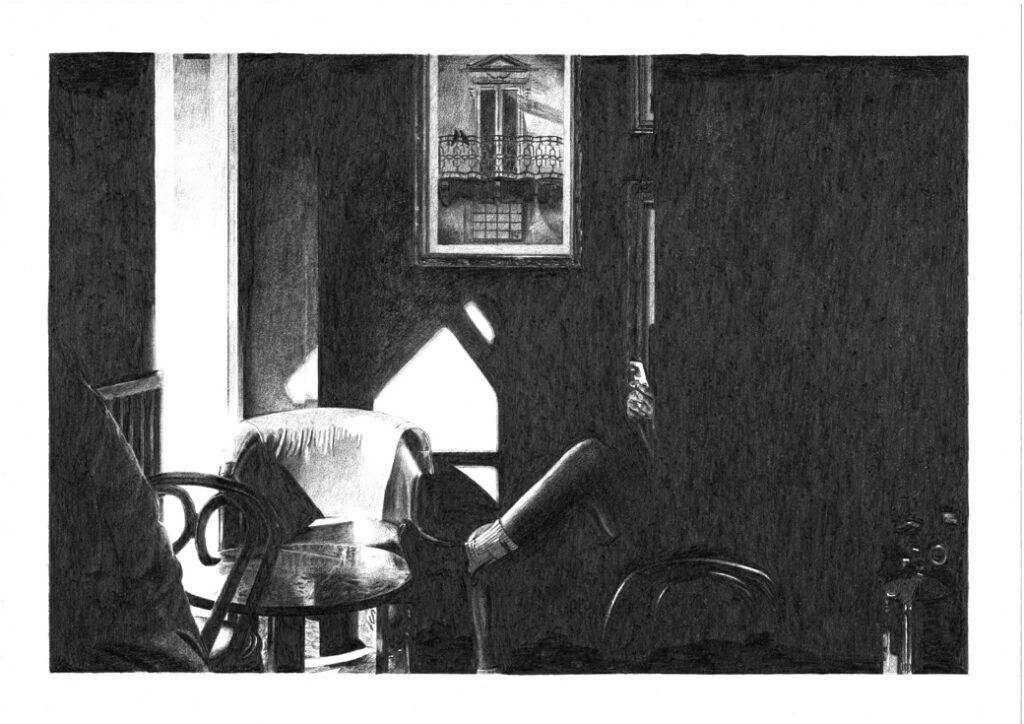
Frederick Terpstra
Hidden but apparent, 2026
graphite on Fabriano Accademia paper
image: 21 x 29.7cm (8.27 × 11.69 in.)
framed: 32 x 42cm (12.60 × 16.54 in.)
FRT.00001.Z
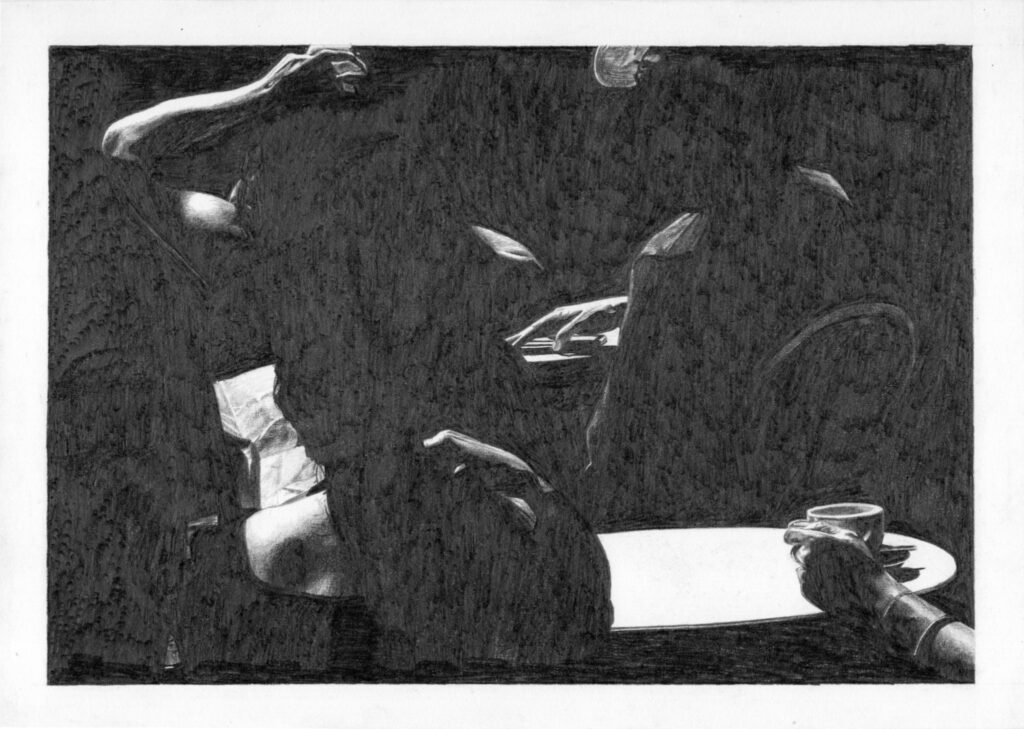
Frederick Terpstra
The four temperaments, 2026
graphite on 120gr Fabriano Accademia paper
image: 21 x 29.7cm (8.27 × 11.69 in.)
framed: 32 x 42cm (12.60 × 16.54 in.)
FRT.00003.Z
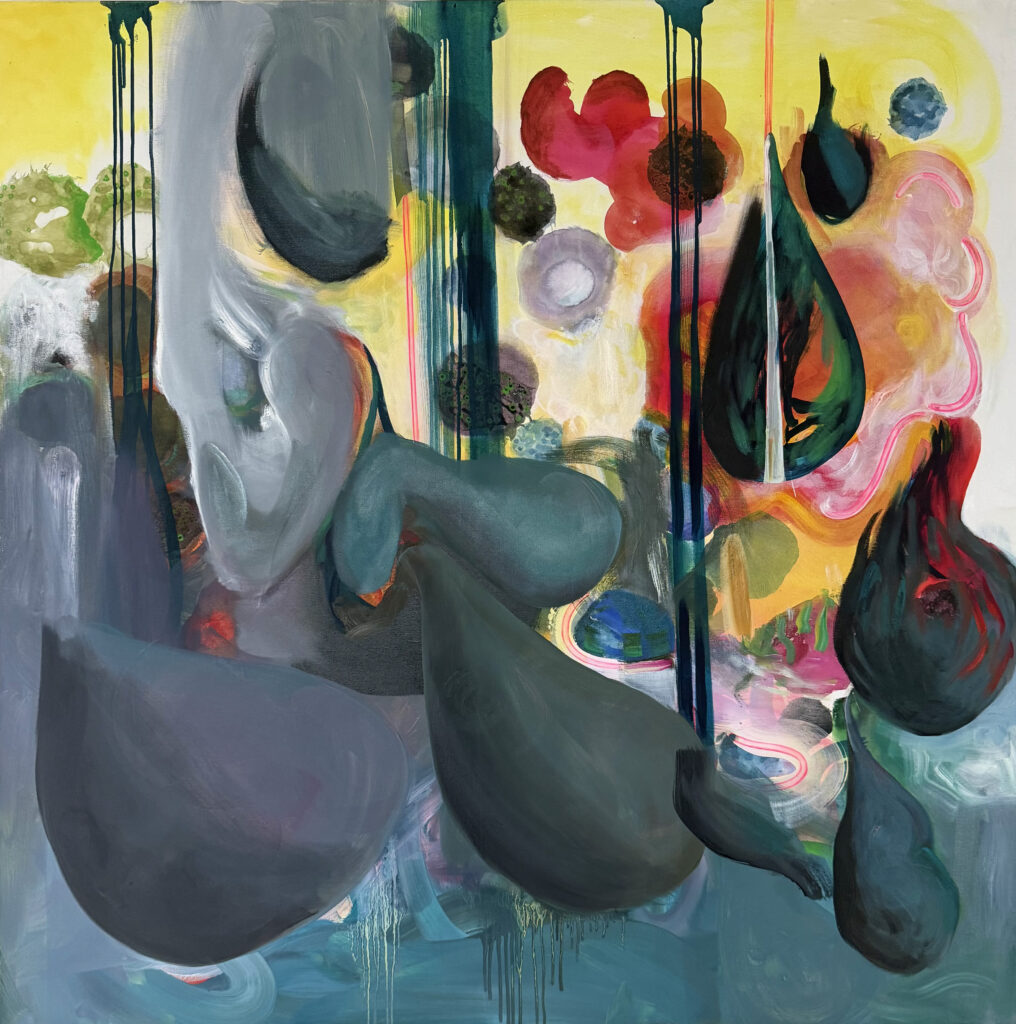
Seol Kwon
Seol Kwon
Seol Kwon